RAG vs Fine-Tuning vs Prompting: Enterprise LLM Architecture
RAG fine-tuning prompting architecture decision matrix for enterprise LLMs

Fifty-one percent of enterprise AI deployments now use retrieval-augmented generation (RAG) in production. Only 9% use fine-tuning. When evaluating the RAG fine-tuning prompting landscape, those figures, from the Menlo Ventures 2024 State of Generative AI in the Enterprise report, are not a story about one technology winning — they are a story about missing decision … Read more

Optical Interconnects and the AI Data Center Bandwidth Wall

Optical interconnects AI data center bandwidth architecture and packaging roadmap

The race to build larger AI clusters has pushed GPU counts into the hundreds of thousands. Raw compute has scaled remarkably — NVIDIA’s Hopper and Blackwell generations ship in volume, Google has iterated through multiple TPU generations, and Meta and Microsoft have deployed custom ASICs. As compute supply has grown, a different bottleneck has emerged … Read more

Multimodal AI at Work: Proven Document Workflows Scale as Video and Vision Pilot in 2026

Multimodal AI enterprise production adoption rates across vision and audio models

When Morgan Stanley deployed a GPT-4–based assistant to its wealth management division, the share of relevant research content that advisors could find in a query jumped from 20% to 80%. Ninety-eight percent of advisor teams now use the tool actively. The system, however, works primarily on text — summarising reports, answering questions about research documents … Read more

Agentic AI’s Attack Surface Is Already Exploited

Agentic AI security vulnerability audit and MCP protocol attack surface diagram for 2026

On 29 September 2025, Koi Security researchers flagged the first confirmed malicious Model Context Protocol server in the wild. A rogue npm package named postmark-mcp — a near-identical copy of Postmark Labs’ official library — had spent two weeks silently BCC’ing every email sent through it to an attacker-controlled address. It accumulated 1,643 downloads before … Read more

HBM’s Thermal Wall: Why One Korean Chipmaker Controls the Pace of the AI Build-Out

HBM memory bottleneck and high-bandwidth packaging supplier market share chart for 2026

The HBM memory bottleneck is the constraint that sets how fast AI hardware can ship. Every NVIDIA Blackwell B200 GPU ships with 192 gigabytes of HBM3e memory spread across eight stacks, delivering 8.0 terabytes per second of memory bandwidth. That is 2.4 times the memory capacity of an H100 — packed into roughly the same … Read more

Silicon Quantum Computing Just Proved It Can Do Real Computation — and Existing Chip Fabs Could Build It

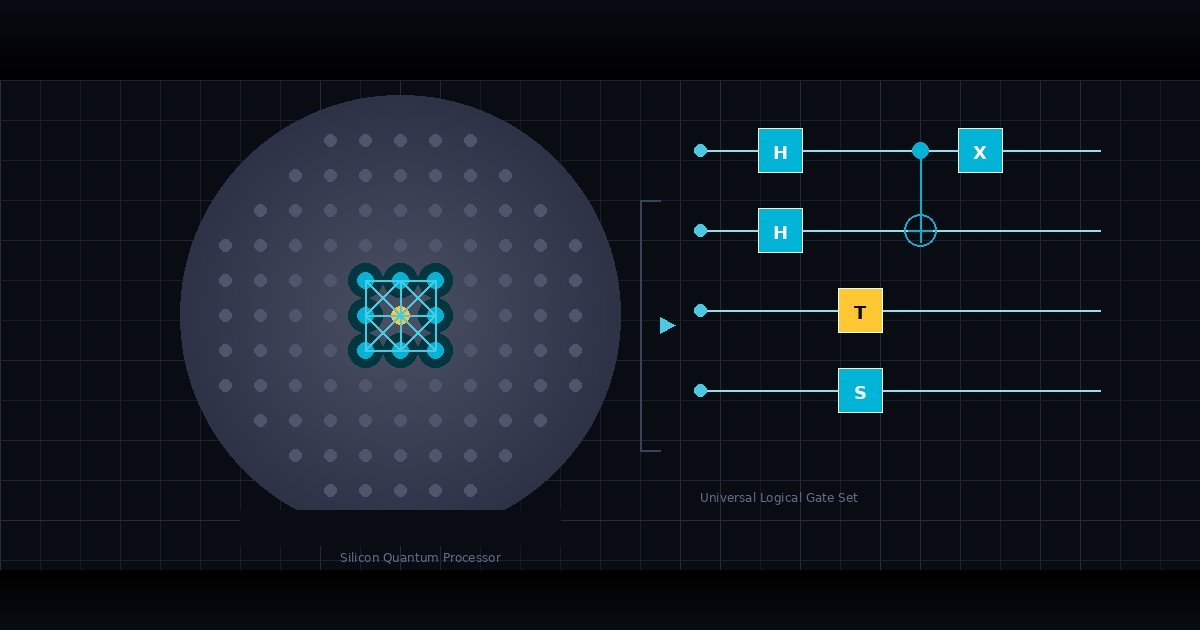
Silicon quantum computing chip architecture and logical qubit demonstration in 2026

Silicon quantum computing just cleared its most important technical hurdle. Researchers at the Shenzhen International Quantum Academy (SZIQA) have demonstrated the first universal set of logical quantum operations on a silicon-based processor, closing the last major capability gap between silicon qubits and their superconducting and trapped-ion rivals. The result, published in Nature Nanotechnology on 23 … Read more

The Definitional Gap: Why the Industry Can’t Agree on What “Production” Means for AI Agents

AI agents enterprise production gap and deployment metrics in 2026

Most enterprises now have AI agents running somewhere in their organisations, and the AI agents enterprise question is no longer whether they exist but whether they are in production. Depending on which survey you read, the number is either encouraging or alarming — and the gap between those readings reveals more about the state of … Read more